

How Do You Share Information Effectively at Work?
Effective information sharing at work requires clear communication, the right sharing methods, and appropriate access controls. Learn how businesses can share information securely, efficiently, and with the context employees, customers, vendors, and stakeholders need.
published:

- 28
- 833
- 17
Understanding the Fundamentals of Information Sharing at Work
Effective information sharing is critical to any successful business. It enables employees, managers, and business owners to make informed decisions, collaborate efficiently, and drive growth. At its core, information sharing involves exchanging relevant data, knowledge, and context between individuals or groups to achieve a common goal or objective. Information sharing can take many forms, including verbal communication, written documents, digital files, and visual aids, each with its strengths and weaknesses.
From an operational perspective, the key principles of effective information sharing in the workplace include contextualization, providing relevant background information and explanations to facilitate understanding; access control, ensuring sensitive information is only shared with authorized personnel; and standardization, establishing consistent protocols and formats for information sharing to avoid confusion and errors.
- Clarity: Information should be presented clearly and concisely, avoiding ambiguity and ensuring the intended message is conveyed effectively.
- Relevance: Shared information should be relevant to the recipient's needs and goals, reducing unnecessary noise and minimizing the risk of information overload.
- Timeliness: Information should be shared in a timely manner, considering the urgency and deadlines associated with relevant business activities or decisions.
- Security: Sensitive information should be protected from unauthorized access, theft, or damage, using measures such as encryption, access controls, and secure storage.
Ineffective information sharing can lead to negative consequences, including missed deadlines, poor decision-making, and compromised confidentiality. Business owners and managers must prioritize the development of robust information-sharing practices that balance accessibility with responsibility. This fosters an environment of trust, accountability, and informed decision-making, ultimately driving business success and growth.
Implementing effective information-sharing practices requires a deep understanding of the organization's unique needs, goals, and constraints. This involves identifying the intended audience and determining what information they need to know, as well as establishing clear protocols for information governance and access control. By taking a structured approach to information sharing, businesses can minimize the risks associated with ineffective communication and maximize the benefits of collaboration, innovation, and growth.
Ineffective information sharing can also lead to information silos, where critical data and knowledge become isolated within specific departments or teams, limiting their accessibility and utility. To mitigate this risk, businesses must prioritize the development of information-sharing frameworks that facilitate cross-functional collaboration and ensure relevant information is shared across organizational boundaries. This creates a more agile, responsive, and adaptive organization better equipped to navigate the complexities of the modern business environment.
As employees, managers, and business owners navigate information sharing, they must be mindful of the ethical implications of their actions. This includes respecting the confidentiality and privacy of sensitive information, avoiding the sharing of misinformation, and prioritizing transparency and accountability. By embracing these ethical principles and developing a culture of responsible information sharing, businesses can foster an environment of trust, respect, and collaboration, driving long-term success and sustainability.
Learn More About Information Sharing at Work
Comparing Methods for Sharing Information at Work
Effective information sharing at work depends on choosing the right method to convey the intended message, considering the purpose of the communication, the sensitivity of the information, the audience, and whether the recipient needs to read, discuss, review, approve, or act on it. Email communication, business meetings, and document management are three commonly used methods, each with its own set of best practices that can significantly influence the efficacy of information sharing.
The choice between these methods depends on the nature of the information being shared, the level of interactivity required, and the desired outcome. For instance, email is often preferred for sharing documents, updates, or notifications that do not require immediate feedback or discussion, while business meetings are more suited for interactive sessions where feedback, discussion, and decision-making are essential. Document management is crucial for organizing, storing, and retrieving information in a secure and accessible manner.
Understanding the strengths and weaknesses of each method is critical. Email offers the advantage of asynchronous communication, allowing recipients to respond at their convenience. However, it can lead to information overload and misunderstandings if not managed properly. Business meetings provide a platform for real-time interaction but can be time-consuming and may not be feasible for geographically dispersed teams. Document management systems offer a centralized repository for information but require proper setup, maintenance, and access controls to ensure that information is secure and accessible to authorized personnel.
Comparing these methods across various parameters can help identify the best practices associated with each. The following table highlights some key aspects to consider when choosing a method for sharing information at work.
| Method | Purpose | Interactivity | Security | Accessibility |
|---|---|---|---|---|
| Email Communication | Sharing updates, documents, notifications | Low | Medium | High |
| Business Meetings | Discussion, feedback, decision-making | High | High | Medium |
| Document Management | Storing, organizing, retrieving information | Low | High | High |
Each method has unique characteristics that make it more or less suitable for different scenarios. Email is versatile and widely used but may lack the interactivity and security required for sensitive or complex discussions. Business meetings offer high interactivity and can be secure but are limited by the need for physical presence or synchronous virtual meetings. Document management systems provide a secure and accessible repository for information but are primarily used for storing and retrieving documents rather than facilitating real-time communication.
Best practices for sharing information at work include selecting the method that best aligns with the purpose and requirements of the communication, ensuring that the chosen method provides an appropriate level of interactivity, security, and accessibility, and implementing measures to prevent information overload, ensure clarity, and promote understanding among recipients. Establishing clear guidelines and protocols for information sharing, providing training on effective communication and document management, and continuously evaluating and improving information-sharing practices are also crucial for maintaining a culture of transparency, trust, and efficiency within an organization.
Integrating these methods can further enhance the effectiveness of information sharing. For example, using document management systems to store and share documents discussed during business meetings, or utilizing email to follow up on action items and decisions made during meetings. This integrated approach streamlines information sharing and helps maintain a record of communications, decisions, and actions, which is essential for accountability, compliance, and future reference.
Ineffective information sharing can lead to misunderstandings, delays, or breaches of confidentiality, highlighting the importance of adopting best practices and continuously assessing the appropriateness of the methods used. By doing so, organizations can mitigate these risks, improve the clarity and impact of their communications, and ultimately enhance their operational efficiency and decision-making capabilities. As the volume and complexity of information shared within and outside organizations continue to grow, the need for effective methods and best practices in information sharing will become even more critical, making it an area of ongoing importance for business leaders and information managers.
Real-World Examples of Effective Information Sharing in Different Settings
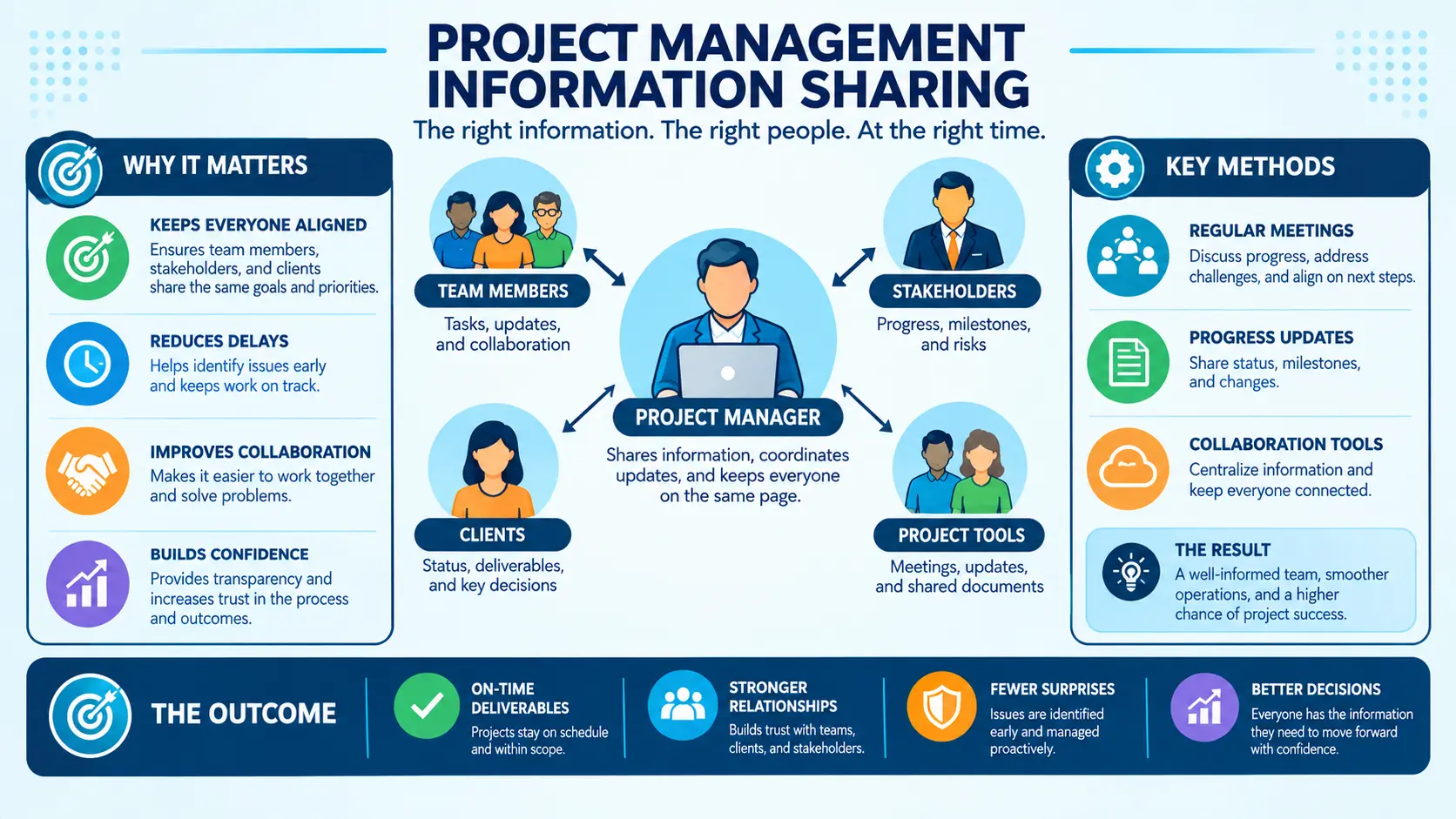
Effective information sharing is crucial in various business settings, and different industries handle it in distinct ways. In project management, for example, clear communication and information sharing are vital for a project's success. Project managers share information with team members, stakeholders, and clients to ensure everyone is on the same page. This is achieved through regular meetings, progress updates, and collaboration tools.
In customer service, information sharing is critical for providing excellent service and building trust with customers. Companies share information with customers about their products, services, and policies while protecting customer data. This can be achieved through clear communication and secure channels. For instance, a company may use a secure online portal to share account and order information with customers.
"Effective information sharing is essential for building trust with our customers. We use a secure online portal to share information with them about their accounts and orders, and we ensure that all communication is clear and concise." - Customer Service Manager, XYZ Corporation
Vendors also require information sharing to understand a company's needs and expectations. Companies share information about their products, services, and requirements with vendors while protecting vendor data. Regular communication and secure channels facilitate this process. A vendor portal, for example, can be used to share product and service information with vendors.
- Clear communication: Companies must communicate clearly with vendors about their needs and expectations.
- Secure communication channels: Companies must use secure channels to protect vendor data.
- Regular updates: Companies must provide regular updates to vendors about their products and services, as well as any changes to their requirements.
Operationally, effective information sharing ensures that all stakeholders are aware of a company's goals, objectives, and policies. This is achieved through regular communication and collaboration tools. For example, a project management tool can be used to share task and deadline information with team members.
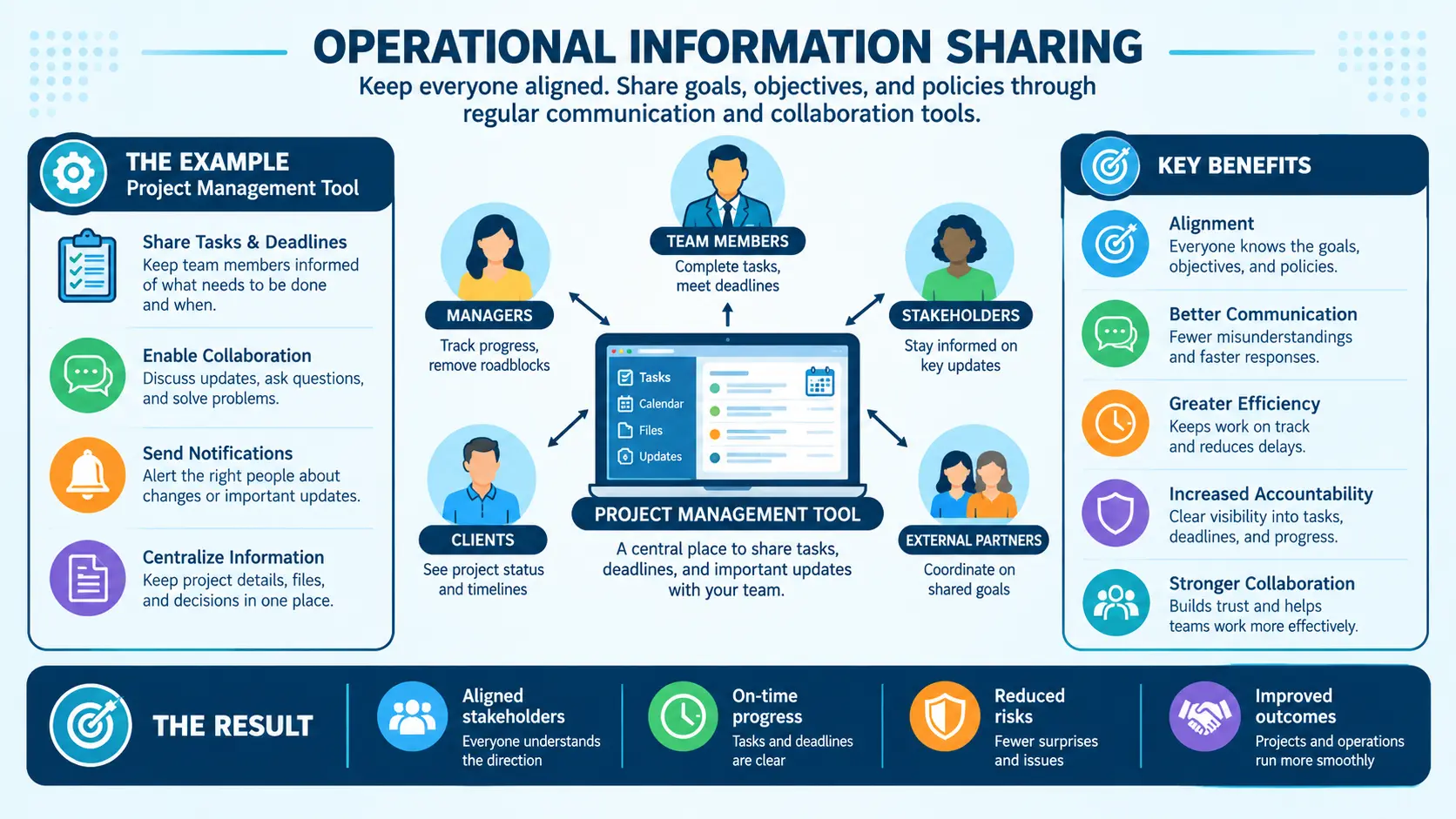
Ineffective information sharing can lead to errors and misunderstandings. When information is not shared effectively, stakeholders may not understand a company's goals, objectives, and policies, leading to mistakes and delays. For instance, a team member unaware of a project deadline may not prioritize tasks accordingly, resulting in delays and cost overruns.
The healthcare industry also relies on effective information sharing. Clear communication and information sharing are critical for providing excellent patient care. Healthcare professionals share information with patients about their medical conditions, treatment options, and medications while protecting patient data. Secure online portals, for example, can be used to share medical records and treatment plans with patients.
"Effective information sharing is essential for providing excellent patient care. We use a secure online portal to share information with patients about their medical records and treatment plans, and we ensure that all communication is clear and concise." - Healthcare Professional, ABC Hospital
Effective information sharing is critical in various business settings, with different industries handling it in distinct ways. By providing clear communication, using secure channels, and ensuring all stakeholders are aware of a company's goals and policies, companies can share information effectively and efficiently.
Implementing Structured Information Sharing with Checklists and Toolkits
Effective information sharing within an organization relies on clear, actionable protocols that ensure confidentiality, accessibility, and understanding. Checklists and toolkits are crucial in this endeavor, providing a structured framework for evaluating, creating, and disseminating information. By integrating these tools into daily operations, organizations can enhance their ability to share information securely and efficiently, fostering a culture of transparency, accountability, and collaboration.
A primary consideration in implementing checklists and toolkits for information sharing is identifying and categorizing confidential information. This involves analyzing the types of data that require restricted access, such as financial reports, client lists, and strategic plans. By defining what constitutes confidential information, organizations can develop targeted protocols for its handling and dissemination, ensuring that access permissions are appropriately assigned and accountability measures are in place to monitor and control the flow of sensitive data.
- Confidentiality Assessment Checklist: This tool helps organizations evaluate the sensitivity of their information assets. It includes questions such as: What types of information do we handle? Who needs access to this information? What are the potential risks if this information is compromised?
- Access Control Toolkit: This toolkit provides guidelines and procedures for managing access to confidential information. It covers aspects such as user authentication, role-based access control, and the principles of least privilege, ensuring that individuals have access to only the information necessary for their job functions.
- Information Sharing Protocol: This protocol outlines the steps to be taken when sharing information, both internally and externally. It includes considerations for the method of sharing, the level of encryption required, and the need for non-disclosure agreements (NDAs) or other contractual protections.
Effective information sharing is not just about the technology used, but about understanding the purpose, audience, and context of the information being shared. By implementing structured protocols and utilizing checklists and toolkits, organizations can ensure that their information sharing practices are aligned with their business objectives and risk management strategies.
- Accountability in Information Sharing
- Ensures that all actions related to the sharing of information are traceable to specific individuals or roles. This involves maintaining logs of access and modifications to confidential information, as well as regular audits to ensure compliance with established protocols.
- Confidential Information Management
- Encompasses the practices and procedures for handling sensitive information, from its creation through to its disposal. This includes secure storage, access controls, and measures to prevent unauthorized disclosure or theft.
- Information Sharing Framework
- Provides a structured approach to evaluating the need for information sharing, determining the appropriate level of access, and ensuring that all sharing activities are conducted in a manner that protects confidentiality and supports business objectives.
Integrating checklists and toolkits into information sharing practices can reduce the risk of data breaches and improve operational efficiency. By standardizing processes for evaluating, creating, and disseminating information, organizations can minimize the potential for human error and ensure that all stakeholders have access to the information they need to perform their roles effectively. This can also facilitate compliance with regulatory requirements and industry standards for data protection, enhancing the organization's reputation and trust among its clients and partners.
Ineffective information sharing practices can lead to misunderstandings or misinterpretations of shared information, resulting in incorrect decisions, missed opportunities, or even legal and financial repercussions. To mitigate this risk, organizations should prioritize the development of clear, concise communication protocols that ensure all shared information is accompanied by sufficient context and explanatory material. This might include using standardized templates for reports and documents, establishing a centralized repository for shared information, and providing regular training sessions for employees on effective communication and information sharing practices.
The strategic use of checklists and toolkits is critical for effective information sharing within organizations. These tools provide a structured framework for evaluating, creating, and disseminating information, helping ensure that confidentiality is protected, accessibility is maintained, and understanding is facilitated. As organizations navigate the complexities of the digital age, the importance of implementing robust information sharing protocols will continue to grow, underscoring the need for a proactive and structured approach to this critical aspect of business operations.
Questions About Sharing Information at Work
Effective information sharing is crucial for organizational success. It involves understanding the purpose of the communication, the audience, and the context in which the information will be used. This section addresses common questions about sharing information at work, providing insights and guidance on best practices for clear and secure communication.
- What are the key considerations for sharing information with stakeholders?
-
When sharing information with stakeholders, consider the purpose of the communication, the audience, and the level of access required. Stakeholders may include employees, customers, vendors, partners, and investors, each with different needs and expectations. Data privacy is critical, as sensitive information must be protected from unauthorized access. Decision-making is also key, as stakeholders need to understand the context and implications of the information being shared.
Organizations must establish clear guidelines and protocols for sharing information with stakeholders. This includes determining the appropriate communication channels, ensuring that information is accurate and up-to-date, and providing training and support for employees who will be sharing information. By taking a structured approach to information sharing, organizations can build trust with their stakeholders and maintain the confidentiality and integrity of sensitive information.
- How can organizations ensure that information is shared securely and efficiently?
-
Ensuring the secure and efficient sharing of information requires a combination of technical and procedural measures. Organizations should implement robust access controls, including authentication and authorization protocols, to prevent unauthorized access to sensitive information. Data encryption is also essential, as it protects information from interception and eavesdropping. Clear policies and procedures for information sharing should be established, including guidelines for email, document sharing, and other communication channels.
Organizations can leverage various tools and technologies to support secure information sharing, such as secure file transfer protocols, encrypted email services, and collaboration platforms that provide real-time access to information. By investing in these technologies and establishing clear policies and procedures, organizations can minimize the risk of data breaches and ensure that information is shared efficiently and securely.
- What are the consequences of ineffective information sharing in the workplace?
-
Ineffective information sharing can have significant consequences for organizations, including delayed decision-making, missed opportunities, and compromised relationships with stakeholders. When information is not shared clearly and efficiently, employees may struggle to understand their roles and responsibilities, leading to confusion and mistakes. Ineffective information sharing can also lead to data breaches and other security incidents, as sensitive information may be shared inappropriately or without proper authorization.
Ineffective information sharing can also have financial and reputational consequences. Organizations that fail to share information effectively may experience decreased productivity, increased costs, and reduced competitiveness. The lack of transparency and accountability can damage an organization's reputation and erode trust with stakeholders. By prioritizing effective information sharing, organizations can mitigate these risks and achieve their goals more efficiently.
- How can organizations establish a culture of transparency and accountability in information sharing?
-
Establishing a culture of transparency and accountability in information sharing requires leadership commitment, clear policies and procedures, and employee training and education. Organizations should promote a culture of openness and transparency, encouraging employees to share information freely and without fear of reprisal. Clear policies and procedures should be established for information sharing, including guidelines for confidentiality, data protection, and access controls.
Organizations should also establish mechanisms for monitoring and evaluating information sharing practices, including regular audits and feedback mechanisms. This helps to identify areas for improvement and ensures that information sharing practices are aligned with organizational goals and values. By fostering a culture of transparency and accountability, organizations can build trust with their stakeholders and maintain the integrity and confidentiality of sensitive information.
A secondary risk factor associated with ineffective information sharing is the potential for data breaches and other security incidents. When sensitive information is shared inappropriately or without proper authorization, it can be compromised by unauthorized parties, leading to financial and reputational damage. To mitigate this risk, organizations should implement robust access controls and establish clear policies and procedures for information sharing. By prioritizing effective information sharing and maintaining the confidentiality and integrity of sensitive information, organizations can minimize the risk of data breaches and maintain the trust of their stakeholders.
Frequently Asked Questions
Why is context important when sharing information at work?
Context helps recipients understand what information means, why it matters, and how it should be used. Without sufficient context, information can be misunderstood, leading to incorrect decisions, missed deadlines, and unnecessary follow-up.
What is the best way to share information at work?
There is no single best method for every situation. Email works well for updates, documents, and notifications, business meetings are better for discussion and decision-making, and document management is useful for organizing, storing, and retrieving business information.
How do you share information effectively at work?
Share information based on its purpose, audience, sensitivity, and desired outcome. Choose an appropriate method, provide enough context for the recipient to understand the information, and make clear whether they need to read, discuss, review, approve, or act on it.
How does effective information sharing improve business decisions?
Effective information sharing gives employees, managers, and business owners the relevant information and context they need to understand a situation and make informed decisions. Timely, accurate, and relevant information can reduce confusion, delays, and avoidable mistakes.
How can checklists improve information sharing at work?
Checklists provide a repeatable process for evaluating information before it is shared. They can help employees consider confidentiality, intended recipients, access requirements, communication methods, and potential risks, reducing human error and inconsistent practices.
How can businesses share information securely and efficiently?
Businesses can combine clear information-sharing policies with appropriate access controls, secure communication methods, and consistent procedures. Information should be accurate and current, shared with the appropriate audience, and accompanied by enough context for recipients to understand it.
What should you consider before sharing information with stakeholders?
Consider the purpose of the communication, who the stakeholders are, what information they need, and what level of access is appropriate. Accuracy, currency, confidentiality, privacy, and the information's implications for decision-making should also be considered.
How do email, meetings, and document management differ for information sharing?
Email is commonly used for updates, documents, and notifications and supports asynchronous communication. Meetings provide greater interactivity for discussion, feedback, and decisions. Document management supports the organized storage, access, and retrieval of business information.
How can businesses prevent information silos?
Businesses can reduce information silos by establishing information-sharing frameworks that make relevant information available across organizational boundaries. Consistent protocols, clear ownership, and appropriate access help ensure that important information does not remain isolated within individual teams or departments.
How should confidential information be shared at work?
Confidential information should be shared only with people who need access and through communication methods that provide appropriate protection. Businesses should establish clear protocols for confidential information, including access controls and procedures for internal and external sharing.
What are the consequences of ineffective information sharing in the workplace?
Ineffective information sharing can cause misunderstandings, delayed decisions, missed deadlines, duplicated work, security incidents, and damaged relationships with stakeholders. It can also create information silos that prevent employees from accessing knowledge they need.
How do you choose the right method for sharing information?
Consider what you are sharing, who needs it, how sensitive it is, how much interaction is required, and what outcome you need. The appropriate method should provide the necessary balance of interactivity, security, and accessibility.