

What Is Organizational Transparency and Why Does It Matter?
Organizational transparency helps businesses build trust through clear information sharing, strong governance, and better decision-making. Learn how structured information, secure document sharing, and information governance practices improve stakeholder confidence.
published:

- 31
- 901
- 50
Defining Organizational Transparency: A Foundation for Trust and Governance
Organizational transparency refers to the intentional disclosure of relevant information by an organization to its stakeholders, fostering trust, accountability, and informed decision-making. This concept is rooted in the understanding that transparency is not solely about unrestricted access to information, but rather about presenting it in a clear, consistent, and contextual manner. As organizational transparency becomes increasingly vital for businesses, it is essential to grasp its underlying principles and how they impact trust and governance.
The importance of organizational transparency cannot be overstated, as it directly influences an organization's ability to establish and maintain trust with its stakeholders. When information is well-organized, easily accessible, and presented in a clear context, stakeholders are better equipped to make informed decisions, thereby reducing the risk of misunderstandings and miscommunications. This, in turn, leads to enhanced collaboration, improved operational efficiency, and increased confidence in the organization's leadership.
Organizational transparency is not about revealing everything, but about providing the right information at the right time, in a way that supports informed decision-making and fosters trust.
A critical aspect of organizational transparency is the implementation of structured methods for presenting information. This can be achieved through the use of virtual data rooms, which provide a secure and centralized platform for storing and sharing sensitive information. By utilizing such tools, organizations can ensure that confidential information is handled appropriately, while still maintaining the necessary level of transparency.
| Benefit | Description |
|---|---|
| Enhanced Trust | Fosters trust among stakeholders through open communication and transparency |
| Improved Decision-Making | Provides stakeholders with accurate and timely information, enabling informed decision-making |
| Increased Operational Efficiency | Streamlines information management, reducing the risk of misunderstandings and miscommunications |
From an operational perspective, organizational transparency is closely tied to the concept of governance. Effective governance relies on the ability to make informed decisions, which in turn depends on access to accurate and timely information. By prioritizing transparency, organizations can ensure that their governance structures are robust, accountable, and aligned with the interests of their stakeholders.
The secondary risk factor associated with a lack of organizational transparency is the potential for reputational damage. When information is not managed effectively, it can lead to misunderstandings, miscommunications, and ultimately, a loss of trust among stakeholders. This highlights the importance of implementing structured methods for presenting information, such as those provided by virtual data rooms, to mitigate these risks and maintain stakeholder confidence.
Executive leadership plays a crucial role in promoting organizational transparency, as they are responsible for setting the tone and direction for the organization. By prioritizing transparency and implementing effective information management practices, executives can demonstrate their commitment to trust, accountability, and informed decision-making. This, in turn, can have a positive impact on the organization's culture, leading to increased collaboration, improved morale, and enhanced overall performance.
Learn More About Implementing Organizational Transparency
Establishing Trust through Structured Information
The organization of information is a critical factor in building trust among stakeholders, including employees, customers, and partners. When information is well-structured and easily accessible, it enables informed decision-making, reduces misunderstandings, and fosters a culture of transparency. In contrast, poorly organized information can lead to confusion, errors, and a breakdown of trust.
From an operational perspective, information governance plays a crucial role in establishing trust. Effective information governance ensures that information is accurate, complete, and consistent, which is essential for informed decision-making. A well-governed information environment also enables organizations to maintain confidentiality and comply with regulatory requirements, further reinforcing trust among stakeholders. The following table illustrates the key components of information governance and their impact on trust:
| Component | Description | Impact on Trust |
|---|---|---|
| Data Quality | Ensuring data accuracy, completeness, and consistency | High-quality data builds confidence in decision-making |
| Information Security | Protecting sensitive information from unauthorized access | Effective security measures safeguard confidentiality and prevent data breaches |
| Compliance | Adhering to regulatory requirements and industry standards | Demonstrating compliance reinforces trust and reduces risk |
The relationship between information organization and trust is also influenced by stakeholder communication. When stakeholders have access to clear, concise, and relevant information, they are better equipped to make informed decisions and engage with the organization. The following framework illustrates the importance of stakeholder communication in building trust:
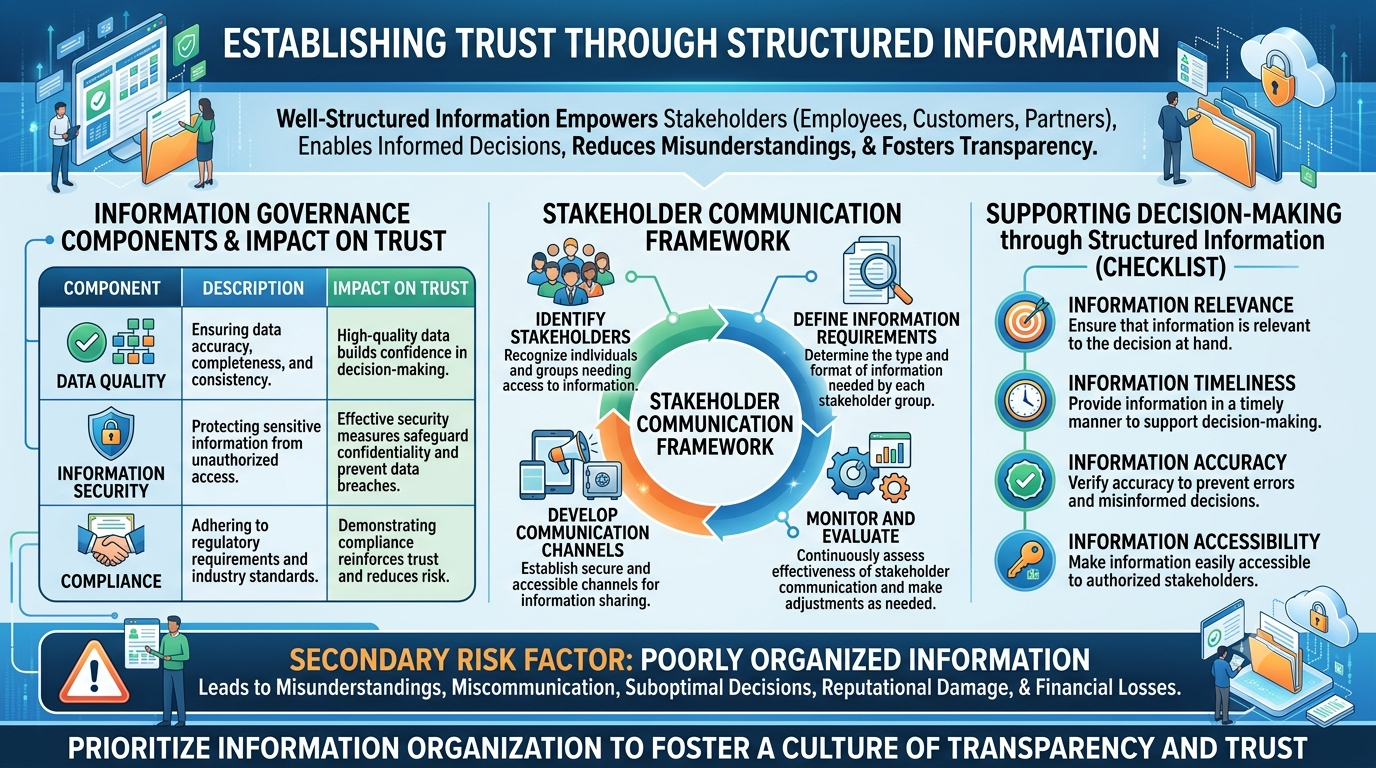
- Identify Stakeholders: Recognize the individuals and groups who require access to information
- Define Information Requirements: Determine the type and format of information needed by each stakeholder group
- Develop Communication Channels: Establish secure and accessible channels for information sharing
- Monitor and Evaluate: Continuously assess the effectiveness of stakeholder communication and make adjustments as needed
Decision-making is another critical aspect of trust, as it relies heavily on the availability and quality of information. When organizations provide stakeholders with access to relevant, timely, and accurate information, they enable informed decision-making and foster a culture of transparency. The following checklist highlights the key considerations for supporting decision-making through structured information:
- Information Relevance: Ensure that information is relevant to the decision at hand
- Information Timeliness: Provide information in a timely manner to support decision-making
- Information Accuracy: Verify the accuracy of information to prevent errors and misinformed decisions
- Information Accessibility: Make information easily accessible to authorized stakeholders
The secondary risk factor associated with poorly organized information is the potential for misunderstandings and miscommunication. When information is not structured or readily available, stakeholders may rely on incomplete or inaccurate data, leading to suboptimal decisions. From a risk management perspective, organizations must prioritize information organization to mitigate this risk and ensure that stakeholders have access to high-quality information. The consequences of failing to do so can be severe, including reputational damage, financial losses, and regulatory penalties.
As organizations strive to build trust among stakeholders, they must recognize the critical role that structured information plays in supporting informed decision-making and stakeholder communication. By prioritizing information governance, developing effective communication channels, and providing access to relevant and timely information, organizations can foster a culture of transparency and trust. The importance of structured information in driving better decision-making and stakeholder communication cannot be overstated, as it has a direct impact on an organization's ability to operate efficiently, manage risk, and maintain stakeholder confidence.
Introduction to Balancing Transparency with Confidentiality
Organizations face a delicate challenge in balancing transparency with the need for confidentiality in information sharing. On one hand, transparency is essential for building trust among stakeholders, facilitating informed decision-making, and ensuring accountability. On the other hand, confidentiality is crucial for protecting sensitive information, maintaining competitive advantage, and complying with regulatory requirements.
The secondary risk factor in this balance is the potential for unintended consequences, such as data breaches, reputational damage, or legal liabilities, which can arise from inadequate information management practices. From an operational perspective, organizations must establish clear policies, procedures, and controls to ensure that confidential information is handled appropriately, while also providing stakeholders with timely and relevant information to support their decision-making needs.
- Establishing a compliance program that outlines the organization's confidentiality and transparency policies
- Implementing risk management practices to identify, assess, and mitigate potential risks associated with information sharing
- Developing a framework for classifying and categorizing confidential information to ensure that it is handled accordingly
Confidentiality and transparency are not mutually exclusive; in fact, they are interdependent. By implementing effective information management practices, organizations can create an environment where confidentiality and transparency coexist, supporting informed decision-making, building trust, and minimizing risks.
The importance of balancing transparency with confidentiality cannot be overstated. In today's digital age, organizations are increasingly vulnerable to cyber threats, data breaches, and other forms of unauthorized disclosure. Moreover, the consequences of failing to maintain confidentiality can be severe, including financial losses, reputational damage, and legal liabilities.
Strategies for Secure Information Sharing
To achieve a balance between transparency and confidentiality, organizations can employ several strategies. One approach is to implement a tiered access system, where stakeholders are granted access to confidential information on a need-to-know basis. This ensures that sensitive information is only shared with authorized individuals, reducing the risk of unauthorized disclosure.
- Implementing encryption technologies to protect confidential information in transit and at rest
- Developing secure communication channels, such as encrypted email or messaging platforms
- Establishing protocols for secure data sharing, including the use of non-disclosure agreements (NDAs) and confidentiality agreements
Another strategy is to adopt a risk-based approach to information management, where the level of transparency and confidentiality is tailored to the specific needs of each stakeholder group. This involves conducting regular risk assessments to identify potential vulnerabilities and implementing controls to mitigate these risks.
A well-designed risk management framework can help organizations balance transparency with confidentiality, ensuring that stakeholders have access to the information they need while minimizing the risk of unauthorized disclosure.
Balancing transparency with confidentiality requires a nuanced understanding of the complex interplay between these two concepts. By implementing effective information management practices, adopting a risk-based approach, and employing strategies for secure information sharing, organizations can create an environment where transparency and confidentiality coexist, supporting informed decision-making, building trust, and minimizing risks.
From a practical perspective, organizations can start by reviewing their existing information management policies and procedures to ensure that they are aligned with the principles of transparency and confidentiality. This may involve conducting a gap analysis to identify areas for improvement and developing a roadmap for implementing changes to their information management practices.
Learn More About Balancing Transparency and Confidentiality
Implementing Transparent Practices: A Step-by-Step Guide to Organizational Transparency
Organizations seeking to establish trust and facilitate informed decision-making must prioritize transparent practices, particularly in the context of corporate governance and due diligence. The absence of clear information architectures hinders stakeholders' ability to make timely and well-informed decisions, thereby increasing the risk of non-compliance and reputational damage. To mitigate these risks, organizations can adopt a structured approach to implementing transparency, focusing on the systematic organization and presentation of critical information.
The initial step in this process involves conducting a thorough assessment of the organization's current information landscape. This entails identifying key data sources, evaluating existing information architectures, and pinpointing areas where transparency can be improved. From an operational perspective, this assessment is crucial for understanding the flow of information within the organization and for pinpointing potential bottlenecks or vulnerabilities that could compromise transparency.
- Define Information Requirements: Organizations must clearly define what information needs to be transparent and accessible. This includes financial reports, compliance documents, and any other data critical for stakeholders to make informed decisions.
- Establish an Information Architecture Framework: Developing a robust framework for organizing and presenting information is essential. This framework should ensure that all relevant information is easily accessible, consistently formatted, and regularly updated.
- Implement Access Controls and Permissions: While transparency is key, confidentiality and privacy must also be respected. Implementing granular access controls ensures that sensitive information is only available to authorized personnel, thereby maintaining the balance between transparency and confidentiality.
The implementation of such a framework requires careful consideration of the organizational context and the specific needs of various stakeholders. It is also crucial to ensure that the framework is scalable and adaptable to changing information requirements and regulatory landscapes. From a due diligence perspective, a well-structured information architecture can significantly reduce the risk associated with mergers and acquisitions by providing clear visibility into an organization's operations and compliance status.
Effective corporate governance is deeply intertwined with transparency, as it ensures that an organization's operations are guided by a clear set of principles and values. Transparency in governance facilitates accountability, reduces the risk of unethical practices, and fosters an environment of trust among stakeholders. By integrating transparent practices into their governance structures, organizations can enhance their reputation, improve decision-making processes, and ultimately contribute to long-term sustainability.
Decision-Making Framework for Transparent Practices
To facilitate the integration of transparency into organizational operations, executives can utilize a decision-making framework that considers the implications of information management on trust, clarity, and compliance. This framework should include:
- Identify Critical Information: Determine what information is vital for stakeholders and ensure it is accurate, complete, and accessible.
- Evaluate Current Practices: Assess existing information management practices to identify areas for improvement in terms of transparency and accessibility.
- Develop a Transparency Strategy: Based on the evaluation, develop a strategy that outlines how the organization will enhance transparency, including the implementation of new information architectures and access controls.
The secondary risk factor associated with poor transparency is the potential for misinformation or lack of information leading to compliance issues. Organizations must therefore prioritize the development of robust documentation practices that ensure all critical information is properly recorded, maintained, and made accessible to relevant stakeholders. This not only supports compliance but also enhances operational efficiency by reducing the time spent searching for information.
By systematically addressing these aspects and integrating transparent practices into their operations, organizations can foster an environment of trust, improve decision-making processes, and ultimately enhance their resilience in the face of regulatory and operational challenges. The emphasis on transparency as a foundational element of organizational strategy underscores its critical role in facilitating governance, ensuring compliance, and supporting long-term business success.
Tools and Technologies for Sustaining Organizational Transparency
Sustaining organizational transparency requires the strategic implementation of tools and technologies that facilitate information governance, business documentation, and secure data sharing. At the forefront of these efforts is the virtual data room (VDR), a platform designed to provide a centralized, secure environment for storing and sharing sensitive documents and information. VDRs have become essential for organizations seeking to maintain transparency while protecting confidential information, as they offer features such as access controls, encryption, and audit trails that ensure the integrity and security of shared data.
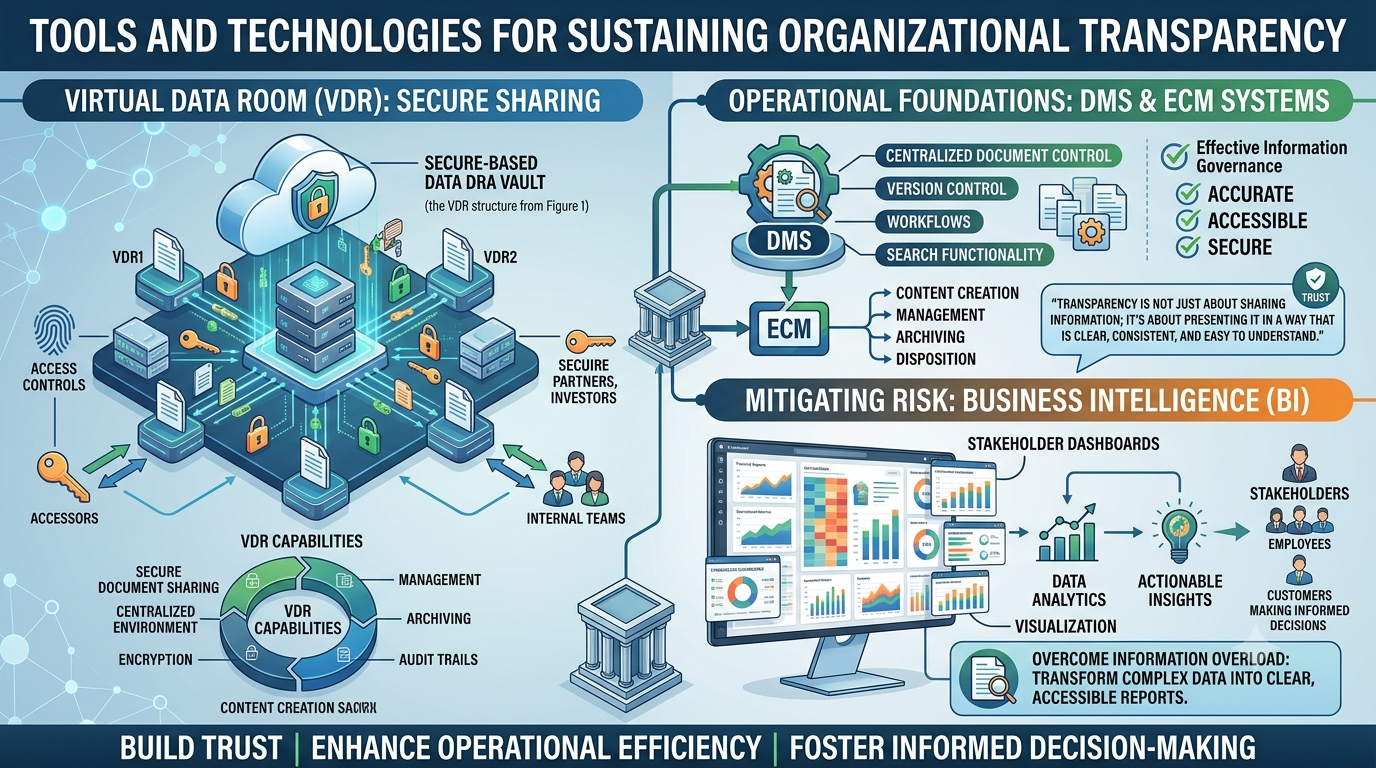
From an operational perspective, information governance is a critical component of organizational transparency. It involves the establishment of policies, procedures, and controls to manage information throughout its lifecycle, ensuring that it is accurate, accessible, and secure. Effective information governance requires the use of technologies such as document management systems (DMS), which provide features like version control, workflows, and search functionality to help organizations manage their documents efficiently. By implementing a DMS, organizations can reduce the risk of data breaches, improve compliance with regulatory requirements, and enhance transparency by providing stakeholders with access to accurate and up-to-date information.
- Virtual Data Rooms (VDRs) for secure document sharing and collaboration
- Document Management Systems (DMS) for centralized document control and versioning
- Enterprise Content Management (ECM) systems for managing the full lifecycle of information
Transparency is not just about sharing information; it's about presenting it in a way that is clear, consistent, and easy to understand. Organizations must invest in tools and technologies that support these goals if they are to build trust with their stakeholders.
The secondary risk factor associated with organizational transparency is the potential for information overload, where stakeholders are presented with too much data, leading to confusion and decreased decision-making efficiency. To mitigate this risk, organizations can leverage business intelligence (BI) tools that provide data analytics and visualization capabilities, enabling them to present complex information in a clear and actionable manner. BI tools also facilitate the creation of dashboards and reports that can be tailored to meet the specific needs of different stakeholder groups, ensuring that each group has access to the information they need to make informed decisions.
Sustaining organizational transparency requires a multifaceted approach that includes the strategic use of tools and technologies such as virtual data rooms, document management systems, enterprise content management systems, and business intelligence tools. By implementing these solutions, organizations can create an environment that fosters trust, clarity, and informed decision-making, ultimately leading to improved operational efficiency and resilience.
Frequently Asked Questions
How do virtual data rooms support organizational transparency?
Virtual data rooms support organizational transparency by providing a structured environment for securely organizing, managing, and sharing confidential business information. They help organizations maintain visibility while controlling access to sensitive documents.
How can companies improve organizational transparency?
Companies can improve organizational transparency by defining information requirements, creating consistent information structures, establishing clear access policies, improving documentation practices, and using secure methods for sharing important information.
What are the risks of poor organizational transparency?
Poor organizational transparency can lead to misunderstandings, inefficient decision-making, compliance challenges, reputational damage, and reduced stakeholder confidence. Disorganized information makes it harder for stakeholders to evaluate situations accurately.
How does organizational transparency improve decision-making?
Organizational transparency improves decision-making by giving stakeholders access to relevant, timely, and accurate information. When information is presented with proper context, leaders can make more confident decisions and reduce the risk of relying on incomplete information.
What role does information governance play in organizational transparency?
Information governance provides the policies, processes, and controls needed to ensure business information is accurate, complete, secure, and accessible. Strong information governance supports transparency while reducing operational and compliance risks.
Can businesses balance transparency with confidentiality?
Yes. Transparency and confidentiality can coexist when organizations use structured information management practices, clear access controls, and appropriate sharing processes. The goal is to provide the right information to the right stakeholders while protecting sensitive information.
How does organized information improve business trust?
Organized information improves business trust by allowing stakeholders to find accurate and relevant information when they need it. Clear structure and context reduce confusion, support informed decisions, and demonstrate organizational accountability.
Why is organizational transparency important for businesses?
Organizational transparency helps businesses establish trust with stakeholders by ensuring information is accurate, accessible, and understandable. It improves decision-making, reduces misunderstandings, strengthens governance, and helps organizations manage risk.
What is organizational transparency?
Organizational transparency is the practice of providing relevant information to stakeholders in a clear, consistent, and contextual way. It helps organizations build trust, improve accountability, and support better decision-making without requiring unrestricted access to all information.